Bertha of Bruneck
William TellBertha of Bruneck joins personal love to public conscience: she feels deeply for the oppressed countrymen and urges Rudenz to become the person his own nature calls him to be. Her secret imprisonment by the viceroy makes her a victim of the same authority that the people resist, and the discovery of her confinement gives the assault on the building an intimate human stake.
Appearance and Introduction
Bertha appears in a hunting dress in a secluded part of the forest, where Rudenz follows her. Her first stated purpose is to explain herself to him, placing their encounter in the register of a private conversation rather than a public assembly. Yet the exchange soon reaches beyond their relationship: Bertha speaks of the suffering of the countrymen and the injustice they endure.
Compassion and Political Conviction
Bertha says that her soul bleeds for the countrymen and that she suffers with them because she loves them. She describes them as gentle but full of power, joining tenderness to an awareness of their capacity for resistance. Her sympathy is not detached pity: she asks what could be more honorable than protecting weak, suffering innocence and vindicating the rights of the oppressed. In this way, the play gives her a clear moral position within the conflict, grounded in concern for those who suffer under power.
Relationship with Rudenz
Bertha’s conversation with Rudenz makes affection a spur to his possible transformation. When he asks whether she trusts him and wonders what he might become with her love, she does not offer him a new identity; she directs him toward the person his own high nature has already destined him to be. Her answer makes love conditional on moral fulfillment rather than a refuge from public responsibility. She encourages Rudenz to align his conduct with the defense of the oppressed, connecting their private bond to his place in the country’s political struggle.
Imprisonment and Narrative Significance
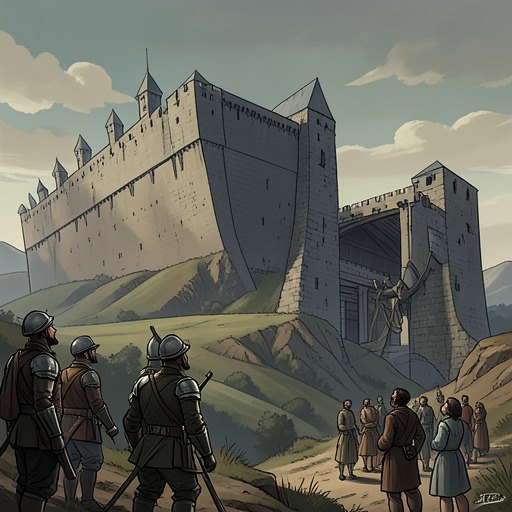
Bertha’s later fate reveals the danger behind that political commitment. Melchthal reports that she had been secretly confined there on the viceroy’s orders. As the people fall upon the building, the discovery prompts Rudenz to spring up in frenzy. Bertha’s imprisonment thus turns the threatened structure into more than an emblem of oppressive authority: it also conceals a person whom the resistance must reach. Her arc, as presented in these scenes, links compassionate speech and political allegiance to the material consequences of tyranny.